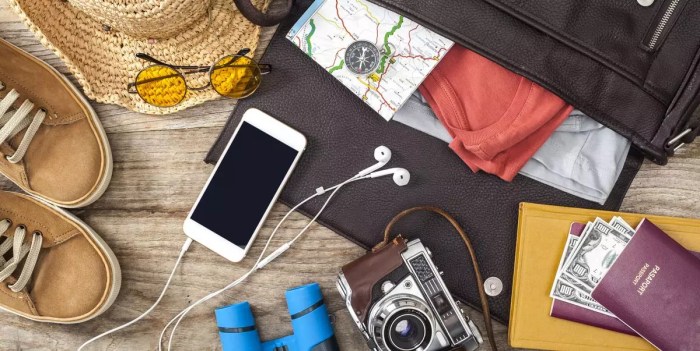
The modern traveler faces a constant battle: staying connected while navigating the world. Depleted phone batteries and low laptop power can quickly derail even the best-laid travel plans. This guide delves into practical strategies and innovative solutions to ensure your electronics remain powered throughout your adventures, transforming potential frustrations into seamless journeys.
From portable power banks and solar chargers to savvy airport charging techniques and understanding international power adapters, we’ll cover a comprehensive range of methods to keep your devices juiced up, regardless of your location. We’ll also explore how to maximize your device’s battery life through software settings and responsible usage. Prepare to conquer the challenge of staying connected on the go!
Portable Power Solutions
Keeping your electronics charged while traveling can be a challenge, especially in areas with limited access to power outlets. Fortunately, a range of portable power solutions are available to ensure you stay connected on the go. These solutions offer varying levels of capacity, portability, and charging speed, allowing you to choose the best option based on your specific needs and travel style.
Types of Portable Chargers
Choosing the right portable charger depends on your needs. Below is a table summarizing some popular options. Note that specifications can vary between models and manufacturers.
| Product Name | Capacity (mAh) | Weight (approx.) | Key Features |
|---|---|---|---|
| Anker PowerCore 10000 | 10000 mAh | 6.7 oz (190g) | Compact, lightweight, multiple USB ports, fast charging |
| RAVPower 26800mAh Portable Charger | 26800 mAh | 1.1 lbs (500g) | High capacity, multiple USB ports, power delivery (PD) support |
| Jackery Portable Power Station Explorer 240 | 240Wh | 2.8 lbs (1.3kg) | AC outlets, USB ports, DC outlets, suitable for larger devices |
| Goal Zero Nomad 100 Solar Panel | N/A (depends on sunlight) | 1.3 lbs (590g) | Solar charging, weather resistant, portable |
Advantages and Disadvantages of Portable Power Solutions
Each type of portable charger offers unique benefits and drawbacks.
Portable Power Banks: These are the most common type. Advantages include their compact size and wide availability. Disadvantages include limited capacity compared to power stations and the need for an initial charge from a wall outlet.
Portable Power Stations: These offer significantly higher capacity and often include AC outlets, allowing you to power more devices. However, they are bulkier and heavier than power banks, and their higher cost is a significant consideration.
Solar Chargers: Solar chargers offer a sustainable way to charge devices, especially useful in remote areas. However, their charging speed is dependent on sunlight availability and intensity, and they might not be suitable for consistently cloudy conditions or nighttime charging.
Charging Speeds and Compatibility
Charging speeds and compatibility vary depending on the charger’s output and the device’s input. Below is a simplified comparison. Always check the specifications of both your charger and device for optimal compatibility.
| Charger Type | Typical Output | Compatibility | Charging Speed |
|---|---|---|---|
| Standard Power Bank | 5V/1A-2.4A | Most smartphones, tablets, and other USB-charged devices | Moderate |
| Power Bank with Quick Charge | 18W or higher | Devices supporting Quick Charge (e.g., some Android phones) | Fast |
| Power Delivery (PD) Power Bank | 20W or higher | Devices supporting USB Power Delivery (e.g., iPhones, some laptops) | Very Fast |
| Solar Charger | Varies greatly | Most USB-charged devices | Slow to moderate (dependent on sunlight) |
Airplane and Airport Charging Hacks
Staying powered up during air travel can be a challenge, but with a little planning and know-how, you can keep your devices charged throughout your journey. This section focuses on strategies for finding charging points and optimizing your devices’ battery life in airports and on airplanes. We’ll cover locating charging stations, maximizing battery life on flights, and identifying airlines that offer in-flight power.Airports and airplanes present unique charging challenges, but proactive strategies can mitigate these.
Finding available outlets often involves a bit of exploration, and understanding how to conserve battery power on flights is crucial for avoiding a dead device mid-journey.
Locating Charging Stations in Airports and on Airplanes
Many airports boast charging stations, though their locations can vary. Look near gates, in lounges (even if you don’t have access, sometimes the public areas have outlets), and in designated tech areas. Some airports even have charging kiosks with multiple ports. On airplanes, power outlets are typically located under the seats in front of you, or sometimes in the armrests.
However, availability varies greatly depending on the aircraft type and the airline. Before boarding, it’s helpful to check your airline’s website or app for information about in-flight power. If you’re unsure, asking a flight attendant once onboard is always an option. Remember to bring your own adapter if necessary, as outlet types can differ internationally.
Maximizing Battery Life on Flights
Several simple steps can significantly extend your device’s battery life during a flight. Reducing screen brightness to the lowest comfortable level conserves a substantial amount of power. Disabling features like Wi-Fi, Bluetooth, and location services when not in use also helps. Airplane mode, while seemingly obvious, is often overlooked; it disables all wireless communication, maximizing battery life. Putting your device in low-power mode or battery saver mode (if available) further reduces energy consumption.
Finally, closing unnecessary apps running in the background frees up resources and prolongs battery life.
Airlines Known for Providing In-Flight Power Outlets
The availability of in-flight power varies considerably among airlines. While not exhaustive, the following airlines are frequently cited for their provision of power outlets on many of their aircraft:
- Delta Air Lines
- American Airlines
- United Airlines
- British Airways
- Lufthansa
It’s crucial to note that even within these airlines, the availability of power outlets can depend on the specific aircraft and flight route. Always check the airline’s website or app for the most up-to-date information before your flight. This will help avoid disappointment and ensure you’re prepared.
Charging on the Go
Staying powered up while exploring new cities or commuting can be a challenge. Fortunately, many readily available resources can help you keep your devices charged without relying solely on portable power banks. This section explores leveraging public spaces and transportation for convenient and safe charging opportunities.
Successfully charging your electronics in public spaces requires a balance of convenience and caution. While many locations offer charging points, it’s crucial to prioritize safety and security to protect your devices and personal data.
Reliable Public Charging Locations
Many establishments understand the need for device charging and proactively provide outlets for their customers. Coffee shops, particularly those with comfortable seating areas designed for extended stays, are often reliable options. Similarly, libraries frequently offer charging stations or accessible power outlets at desks or tables. Some restaurants, especially those with a more relaxed atmosphere and longer dining periods, may also provide charging facilities.
Always check with the establishment before assuming access to power outlets.
Safe Charging Practices in Public Areas
Never leave your devices unattended while charging. Always keep your devices within your line of sight. If possible, use a charging cable that is short enough to prevent someone from easily reaching your device without you noticing. Avoid charging in dimly lit or secluded areas. Consider using a portable power bank as a secondary charging option, reducing the time your device is plugged into a public outlet.
If using a public USB port, it is strongly advised to use your own charging cable, as malicious software could potentially be installed via compromised ports. Be mindful of your surroundings and trust your instincts; if a location feels unsafe, it’s best to find an alternative charging spot.
Effective Portable Charger Use on Public Transportation
Portable chargers are invaluable for maintaining power on buses, trains, and other forms of public transportation. Before embarking on your journey, ensure your portable charger is fully charged. Choose a seat where you can easily access an outlet if available. If outlets are unavailable, strategically manage your device usage to conserve battery life. Prioritize essential apps and temporarily disable non-critical features like location services or background app refresh.
Consider using airplane mode to further extend battery life if internet access isn’t essential. Secure your portable charger and devices while charging; never leave them unattended. For longer journeys, consider carrying a second portable charger or investing in a high-capacity power bank.
International Charging Adapters and Considerations

Navigating the world of international travel often involves grappling with the complexities of different power systems. Understanding the variations in plug types and voltage outputs is crucial to prevent damage to your electronic devices and ensure they remain powered up throughout your journey. This section will provide a practical guide to selecting and using international travel adapters safely and effectively.Different countries utilize various plug types and voltage levels.
For instance, Type A plugs (two flat parallel pins) are common in North America and Japan, while Type C (two round pins) is prevalent in Europe. Voltage varies significantly, with some regions using 110-120 volts (like the US) and others operating on 220-240 volts (like much of Europe and Asia). Using an appliance designed for 110 volts in a 220-volt outlet can result in immediate damage, while using the wrong plug type simply won’t allow your device to connect.
Types of Plugs and Voltages Worldwide
A comprehensive understanding of global plug types and voltages is essential for safe and effective charging abroad. The following table illustrates some of the most common plug types and their corresponding voltage ranges. It is important to note that this is not an exhaustive list, and regional variations can exist. Always verify the specific requirements for your destination.
| Plug Type | Countries/Regions | Voltage (Volts) |
|---|---|---|
| Type A | North America, Japan, parts of Central America | 110-120 |
| Type B | North America, Japan, parts of Central America | 110-120 |
| Type C | Europe, Asia, Africa, South America | 220-240 |
| Type G | United Kingdom, Ireland, Singapore, Malaysia | 220-240 |
| Type I | Australia, New Zealand, Argentina | 220-240 |
Selecting the Appropriate International Travel Adapter
Choosing the right international travel adapter is critical to prevent damage to your electronics. Before purchasing an adapter, identify the plug type used in your destination country and the voltage your devices require. Many adapters offer multiple plug configurations, catering to various countries. Look for adapters that clearly specify the voltage compatibility, ensuring it matches your devices’ requirements.
For example, a dual voltage adapter would be suitable for both 110-120V and 220-240V devices. If your device is only compatible with one voltage, you need an adapter that also converts voltage.
Risks of Using Incompatible Adapters and Mitigation Strategies
Using incompatible adapters can lead to several serious risks. Connecting a device with the wrong voltage can cause immediate damage, potentially resulting in a fire or destroying your electronic device. Using an adapter that doesn’t properly ground your device can also result in electric shock. To mitigate these risks, always verify the voltage compatibility of your adapter and your device.
Never attempt to force a plug into an incompatible outlet. Prioritize purchasing high-quality adapters from reputable brands, as these are more likely to offer safety features like surge protection. If unsure about compatibility, consult the manuals of your device and the adapter before use.
Travel Hacks
Beyond efficiently charging your electronics, several other strategies can significantly improve your travel experience and minimize stress. These hacks focus on maximizing battery life, optimizing device settings, and utilizing helpful accessories to enhance your journey. By implementing these simple techniques, you can ensure a smoother and more enjoyable trip.
Extending Electronic Device Battery Life
Several simple yet effective methods can significantly prolong your electronic devices’ battery life while traveling. Reducing screen brightness, disabling unnecessary background apps, and utilizing airplane mode when not actively using data connections are crucial steps. For example, lowering your phone’s screen brightness by just 20% can noticeably extend its battery life, while disabling location services and Bluetooth when not needed can conserve significant power.
Actively managing your device’s power consumption allows you to enjoy longer usage between charges, especially beneficial in areas with limited charging access.
Benefits of Low-Power Mode and Energy-Saving Settings
Activating low-power mode on your smartphone, tablet, or laptop is a game-changer for extending battery life. This setting typically limits background activity, reduces screen brightness, and disables certain features to conserve energy. For instance, Apple’s Low Power Mode significantly extends iPhone battery life, allowing users to remain connected longer. Similarly, many Android devices offer similar battery saver modes with customizable settings.
Utilizing these modes, in conjunction with other power-saving techniques, can drastically increase the time between charges.
Essential Travel Accessories
A curated selection of travel accessories can enhance your journey’s comfort and efficiency. These items can significantly improve your experience, from protecting your devices to managing cables and ensuring efficient charging.
- Portable Charger: A high-capacity portable charger is indispensable for extending your device’s battery life when access to wall outlets is limited.
- Universal Travel Adapter: This ensures compatibility with various power outlets worldwide, eliminating the frustration of incompatible plugs.
- Protective Case: A sturdy case safeguards your electronics from bumps, scratches, and accidental damage during travel.
- Cable Organizer: Keeping your charging cables neatly organized prevents tangles and simplifies access to the necessary cables.
- External Hard Drive/Cloud Storage: Back up important files and photos to an external hard drive or cloud storage to free up space on your devices and protect your data.
Travel Insurance Considerations
Protecting your valuable electronics while traveling is crucial, and travel insurance can play a significant role in mitigating potential losses. Understanding the coverage options offered by different providers is key to making an informed decision before your trip. This section details the nuances of electronics coverage within travel insurance plans and offers guidance on preparing for a potential claim.Many travel insurance policies offer coverage for lost or damaged electronics, but the extent of this coverage varies significantly depending on the policy’s terms and conditions.
Some policies may offer limited coverage, perhaps only covering a portion of the device’s value or only if the loss or damage occurred under specific circumstances, such as theft or accidental damage. Others might provide more comprehensive coverage, potentially reimbursing the full replacement cost of the electronics. It’s vital to carefully review the policy wording before purchasing to understand the specific exclusions and limitations.
Electronics Coverage Details in Travel Insurance Plans
Travel insurance providers often categorize electronics coverage under different sections, such as “personal belongings” or “luggage.” Coverage limits usually apply, meaning the maximum amount the insurer will pay out for lost or damaged electronics is capped at a specific sum, often ranging from a few hundred to several thousand dollars, depending on the policy’s level of coverage. Some policies may require you to purchase additional coverage for electronics as an add-on, while others include it as part of the standard package.
It’s important to note that pre-existing conditions or wear and tear are usually excluded from coverage. For instance, a cracked phone screen that existed before the trip would likely not be covered. Claims may also require providing proof of purchase, such as a receipt or warranty documentation.
Comparison of Travel Insurance Providers and Their Electronics Coverage
Comparing different travel insurance providers reveals significant variations in their electronics coverage. For example, World Nomads might offer higher coverage limits for electronics compared to Allianz Global Assistance, but Allianz might have a more streamlined claims process. Squaremouth, a travel insurance comparison website, can be a valuable tool for comparing different policies and their coverage levels for electronics.
Always compare multiple quotes to ensure you are getting the best coverage at the most competitive price. Remember to consider factors beyond just electronics coverage, such as medical expenses and trip cancellation coverage, when selecting a policy.
Checklist for Filing a Claim for Damaged Electronics
Before filing a claim, it’s essential to gather all necessary documentation to expedite the process. A comprehensive checklist should include:
- Policy details: Your policy number, the dates of your trip, and the contact information for your insurance provider.
- Proof of purchase: Receipts, warranties, or other documentation proving ownership and the value of your electronics.
- Details of the incident: A detailed description of how the damage or loss occurred, including the date, time, and location. If applicable, include police reports or witness statements.
- Photographs or videos: Visual evidence of the damaged electronics, or the lack thereof in case of loss. These are crucial for supporting your claim.
- Repair or replacement quotes: Obtain quotes from reputable repair shops or retailers for repairing or replacing the damaged electronics.
Gathering this information beforehand ensures a smoother claims process and increases the likelihood of a successful claim. Remember to keep all original documentation in a safe place throughout your trip.
Travel Photography Tips
Capturing stunning travel photos can significantly enhance your memories, but limited battery life often presents a challenge. This section offers practical strategies to maximize your photography while minimizing power consumption, ensuring you don’t miss those perfect shots. We’ll cover techniques for optimizing camera settings, essential accessories, and shooting strategies to make the most of your battery’s lifespan.Optimizing Camera Settings for Battery ConservationTo extend your camera’s battery life, several adjustments to your camera settings can significantly impact power consumption.
Avoid using the LCD screen excessively; opt for the viewfinder whenever possible, as the screen is a major battery drain. Reduce the frequency of using live view mode, especially for long periods. Turning off features like image stabilization when not needed can also save power. Shooting in JPEG format instead of RAW will generally consume less battery power, though RAW offers greater editing flexibility.
Finally, consider lowering the screen brightness. These seemingly small changes can cumulatively lead to a substantial increase in the number of photos you can take before needing a recharge.
Essential Photography Accessories for Travelers
Investing in a few key accessories can greatly improve your travel photography experience and help manage battery life. A portable charger is essential for extending your camera and phone battery life on the go. Consider a high-capacity power bank specifically designed for electronics; aim for one that can charge your devices multiple times. A spare battery for your camera is equally crucial, allowing you to continue shooting without interruption.
A lens cleaning kit is vital for maintaining image quality; dust and smudges can significantly affect your photos. Lastly, a sturdy camera bag offers protection and convenient storage for your equipment. A well-organized bag keeps everything accessible while safeguarding your valuable gear.
Travel Tips
Planning a trip can be exciting, but a little preparation goes a long way in ensuring a smooth and enjoyable experience. This section offers essential travel tips to help you navigate your journey with ease, from packing efficiently to staying healthy and safe abroad. Careful consideration of these points can significantly reduce stress and enhance your overall travel experience.
Efficient Packing and Luggage Management
Efficient packing is crucial for comfortable travel. Overpacking leads to unnecessary weight and potential baggage fees. A well-planned packing strategy minimizes stress and maximizes space. Consider using packing cubes to organize your belongings and compress clothing, saving valuable space in your suitcase. Rolling your clothes instead of folding them can also help reduce wrinkles and save space.
Make a packing list well in advance, checking the weather forecast for your destination to ensure you pack appropriate clothing. Remember to prioritize essential items and leave room for souvenirs. Packing light also makes navigating airports and public transport significantly easier.
Staying Healthy and Safe While Traveling
Maintaining your health and safety is paramount while traveling. Before departure, consult your doctor about necessary vaccinations and any health precautions specific to your destination. Pack a small first-aid kit containing essentials like bandages, pain relievers, antiseptic wipes, and any personal medications. Stay hydrated by drinking plenty of water, especially in hot climates. Be mindful of food and water safety; opt for reputable establishments and avoid consuming raw or undercooked food.
Research local customs and laws to avoid any unintentional offenses. Share your itinerary with a trusted friend or family member and regularly check in with them. Be aware of your surroundings and take necessary precautions against petty theft. Consider travel insurance to cover unexpected medical emergencies or trip disruptions.
General Travel Advice
Several additional tips contribute to a positive travel experience. Book flights and accommodation well in advance, especially during peak seasons, to secure better deals and availability. Learn a few basic phrases in the local language; it shows respect and can be incredibly helpful. Utilize online resources and travel guides to research your destination thoroughly. Embrace spontaneity, but always have a backup plan.
Be respectful of local customs and traditions. Remember to keep important documents, such as your passport and travel insurance information, in a safe and accessible place. Most importantly, be open to new experiences and enjoy the journey!
Travel Visa Requirements
Securing the necessary travel visas is a crucial step in international travel planning. Failure to obtain the correct visa can result in denied boarding, hefty fines, and deportation. Understanding the specific requirements for your destination is paramount to a smooth and stress-free trip.The process of obtaining a travel visa varies significantly depending on your citizenship, the country you are visiting, and the purpose of your visit (tourism, business, work, etc.).
Generally, it involves completing an application form, providing supporting documentation, and attending an interview (in some cases). The application process can take several weeks or even months, so it’s essential to begin the process well in advance of your planned travel dates.
Visa Application Documents and Information
Typically, visa applications require a range of documents. These often include a completed application form, a valid passport with sufficient remaining validity (usually six months beyond your intended stay), passport-sized photographs meeting specific criteria (background color, size, etc.), proof of sufficient funds to cover your expenses during your stay, a confirmed return or onward travel ticket, and proof of accommodation (hotel booking, invitation letter, etc.).
Specific requirements vary significantly depending on the country and the type of visa. For example, a business visa may require a letter of invitation from a company in the host country, while a student visa will need proof of enrollment in an educational institution.
Resources for Researching Visa Requirements
Several reliable resources can assist in researching visa requirements. The official website of the embassy or consulate of the country you plan to visit is the most authoritative source. These websites usually provide detailed information on visa types, application procedures, required documents, fees, and processing times. In addition to embassy and consulate websites, several third-party websites offer visa information, but it’s crucial to verify any information found on these sites with the official government sources to ensure accuracy.
Always check the official government website to avoid misinformation and potential problems. Travel agencies specializing in international travel can also provide guidance, but their information should be cross-referenced with official sources.
Urban Escapes
Urban exploration offers a vibrant alternative to traditional vacations, providing a chance to immerse oneself in diverse cultures, architecture, and culinary scenes within a relatively compact area. Short getaways to exciting cities allow for a concentrated experience, maximizing the enjoyment of a destination without the commitment of a longer trip.
Exciting Urban Destinations for Short Getaways
Several cities stand out as ideal choices for short urban escapes, each offering a unique blend of attractions and experiences. These destinations cater to diverse interests, from history buffs to foodies and art enthusiasts.
- Kyoto, Japan: Known for its serene temples, traditional gardens, and geisha districts, Kyoto offers a captivating blend of ancient and modern Japan. A short trip allows for focused exploration of its key historical sites and cultural experiences.
- Barcelona, Spain: Barcelona’s vibrant architecture, designed by Antoni Gaudí, coupled with its beautiful beaches and lively nightlife, makes it an excellent choice for a short, exciting getaway. The city’s energy is infectious and easily explored in a few days.
- Amsterdam, Netherlands: Famous for its canals, charming houses, and world-class museums, Amsterdam offers a relaxed yet stimulating atmosphere. A short visit allows for a thorough exploration of its picturesque canals and iconic landmarks.
- Lisbon, Portugal: Lisbon’s hilly streets, colorful buildings, and delicious cuisine create a unique and memorable experience. Its rich history, combined with modern attractions, offers a dynamic backdrop for a short city break.
- Reykjavik, Iceland: While not as densely packed as other cities on this list, Reykjavik offers a unique blend of urban amenities and access to stunning natural landscapes. Its compact size makes it easily explorable in a short time.
Exploring Barcelona: A Sample Itinerary
A three-day itinerary for Barcelona could focus on Gaudí’s architectural masterpieces, the city’s culinary delights, and its vibrant cultural scene.
- Day 1: Explore the Sagrada Família, Park Güell, and Casa Batlló. Enjoy a traditional Catalan dinner in the Gothic Quarter.
- Day 2: Visit La Rambla, explore the Barceloneta beach, and enjoy tapas at La Boqueria market. In the evening, take a Flamenco show.
- Day 3: Visit the Picasso Museum, wander through the El Born neighborhood, and enjoy a final paella lunch before departing.
Navigating Public Transportation in Major Cities
Efficient and reliable public transportation is crucial for maximizing your time and minimizing travel stress in any major city. Understanding the local systems is key to a smooth urban exploration.
- Purchase transit passes: Many cities offer day or multi-day passes that provide unlimited travel on buses, subways, and trams, offering significant cost savings compared to individual tickets.
- Utilize city maps and apps: Download city transit apps or utilize online maps to plan your routes and check schedules in real-time. Many apps provide real-time updates on delays and disruptions.
- Learn basic phrases: Knowing a few basic phrases in the local language can be helpful when asking for directions or clarifying routes with transit personnel.
- Consider using ride-sharing services: For shorter distances or late-night travel, ride-sharing services can offer a convenient alternative to public transport, especially if traveling with luggage.
Vacation Packages and Programs
Vacation packages offer a convenient and often cost-effective way to plan and book a trip, bundling together various travel components like flights, accommodation, and sometimes activities or excursions. Understanding the different types available and weighing the pros and cons against independent travel planning is crucial for making an informed decision.Vacation packages cater to a wide range of travel styles and budgets.
They offer a streamlined approach, simplifying the planning process, but also limit flexibility and potentially restrict choices compared to independently arranging each element of a trip.
Types of Vacation Packages
Several types of vacation packages exist, each designed to cater to specific preferences and travel styles. These packages often differ based on the level of inclusivity, destination focus, and target audience.
- All-inclusive resorts: These packages typically cover accommodation, meals, drinks, and some activities within the resort. Examples include resorts in Mexico or the Caribbean, offering a relaxed, hassle-free experience.
- Cruises: Cruise packages encompass accommodation, meals, onboard entertainment, and transportation between ports. Different cruise lines offer various itineraries and levels of luxury, catering to a wide range of budgets.
- Guided tours: These packages include pre-arranged itineraries, transportation, accommodation, and guided excursions, providing a structured and informative travel experience. Examples include bus tours exploring national parks or historical sites.
- City breaks: These packages often combine flights and accommodation in a specific city, with potential add-ons like sightseeing tours or museum tickets. Popular city break destinations include Rome, Paris, or New York.
Advantages and Disadvantages of Vacation Packages
Booking a vacation package presents several advantages and disadvantages compared to independent travel planning. Carefully weighing these factors is essential for making the best decision.
- Advantages: Convenience, cost savings (often through bundled discounts), simplified planning, and reduced stress associated with coordinating multiple travel elements.
- Disadvantages: Less flexibility, potential limitations in choice of flights, accommodation, or activities, and the possibility of hidden costs or unexpected restrictions.
Reputable Vacation Package Companies
Several reputable companies offer comprehensive vacation packages. These companies often have established reputations for reliability and customer service.
- Expedia: A large online travel agency offering a wide selection of packages to various destinations.
- Travelocity: Similar to Expedia, offering a broad range of vacation packages and travel-related services.
- Priceline: Known for its “Name Your Own Price” feature, Priceline also offers pre-packaged vacation deals.
- Booking.com: While primarily known for hotel bookings, Booking.com also offers vacation packages combining accommodation and flights.
Venture Capital and Travel
Venture capital (VC) plays a significant role in shaping the future of the travel industry, fueling innovation and driving growth within a sector constantly evolving to meet changing consumer demands. The influx of VC funding allows travel startups to develop and scale their operations, introducing new technologies and business models that disrupt traditional travel practices. This investment not only benefits the startups themselves but also contributes to the overall advancement and efficiency of the travel experience for consumers worldwide.The travel industry, with its diverse segments and global reach, presents a compelling investment opportunity for venture capitalists.
The sector’s inherent dynamism, driven by technological advancements and shifting consumer preferences, creates a fertile ground for high-growth potential. VC firms assess startups based on their scalability, innovative technologies, and potential to capture market share within specific travel niches. Successful investments can yield substantial returns, making the travel tech sector an attractive area for venture capital allocation.
Examples of Venture Capital-Backed Travel Startups
Several travel startups have successfully secured significant venture capital funding, demonstrating the industry’s attractiveness to investors. These companies represent a diverse range of travel-related services, showcasing the breadth of innovation within the sector. Some notable examples include Airbnb, a platform that revolutionized the hospitality industry through peer-to-peer accommodation rentals; and Booking.com, a leading online travel agency offering a wide range of travel products and services.
These companies, along with others like Skyscanner (flight comparison), Hopper (flight and hotel booking), and Expedia (online travel agency), have demonstrated the transformative power of VC investment in scaling operations and achieving significant market penetration. Their success stories illustrate the potential for substantial returns on investment within the travel technology space.
Investment Trends in the Travel Technology Sector
Current investment trends within the travel technology sector reflect a focus on several key areas. Sustainable travel solutions are attracting increasing attention, with investors seeking companies that prioritize environmentally friendly practices and promote responsible tourism. The rise of the sharing economy continues to drive investment, with platforms offering alternative accommodation, transportation, and experiences gaining traction. Furthermore, artificial intelligence (AI) and machine learning (ML) are playing an increasingly significant role, with investment flowing into startups utilizing these technologies to enhance personalization, optimize pricing, and improve customer service.
Finally, the increasing demand for seamless and personalized travel experiences is driving investment in companies focused on improving the overall user experience through innovative technologies and data-driven insights. The integration of these technologies and approaches reflects the industry’s continuous evolution toward greater efficiency, personalization, and sustainability.
Maintaining a charge on your electronics while traveling shouldn’t be a source of anxiety. By implementing the tips and tricks Artikeld in this guide, you can confidently navigate airports, public transport, and international destinations without the fear of a dead battery. Embrace the power of preparedness and enjoy the freedom of uninterrupted connectivity throughout your journey. Remember, a little planning goes a long way towards a smoother, more enjoyable travel experience.
FAQ Section
What if my portable charger dies while I’m traveling?
Always carry a backup power source, such as a second portable charger or consider seeking out charging stations in cafes or airports.
Can I charge my devices in airplane bathrooms?
Generally, no. Airplane bathrooms lack power outlets and attempting to charge there could be unsafe.
How can I protect my devices from theft while charging in public?
Keep your devices in sight at all times. Consider using a charging cable that’s not easily detached and avoid charging in isolated or poorly lit areas.
What’s the best way to choose a travel adapter?
Check the voltage and plug type of your destination and ensure your adapter is compatible. Look for adapters with surge protection for added safety.


